
If you’ve ever checked your credit report and saw a score in the 700s or 800s, you might’ve wondered, “Is that actually a good credit score?”
In Australia, credit scores can look a little confusing at first, especially because each credit reporting agency uses slightly different ranges. What’s ‘excellent’ with one might be ‘very good’ with another.
Still, knowing where your score sits helps you understand whether you have a good credit score for home loan, auto loan, or other credit applications, and what that means for your financial options.
How Credit Scores Work In Australia
In Australia, your credit score isn’t decided by just one source. The three main credit reporting agencies are Equifax, Experian, and illion, and each one has its own way of calculating your score. They collect your credit information from lenders, banks, and utility providers and determine your score based on how well you pay these bills.
Equifax uses a scale from 0 to 1,200, whereas Experian and illion both use 0 to 1,000. This means a score of 800 doesn’t necessarily mean the same thing across all three agencies.
Every time you apply for credit or pay off a debt, that record is added to your credit history, which these credit reporting agencies use to build your overall credit picture.
These agencies collect data from lenders, banks, and utility providers to assess how responsibly you manage credit. To better understand this process, how credit repair agencies determine credit score explains how data points like repayment history and credit usage influence your final score.
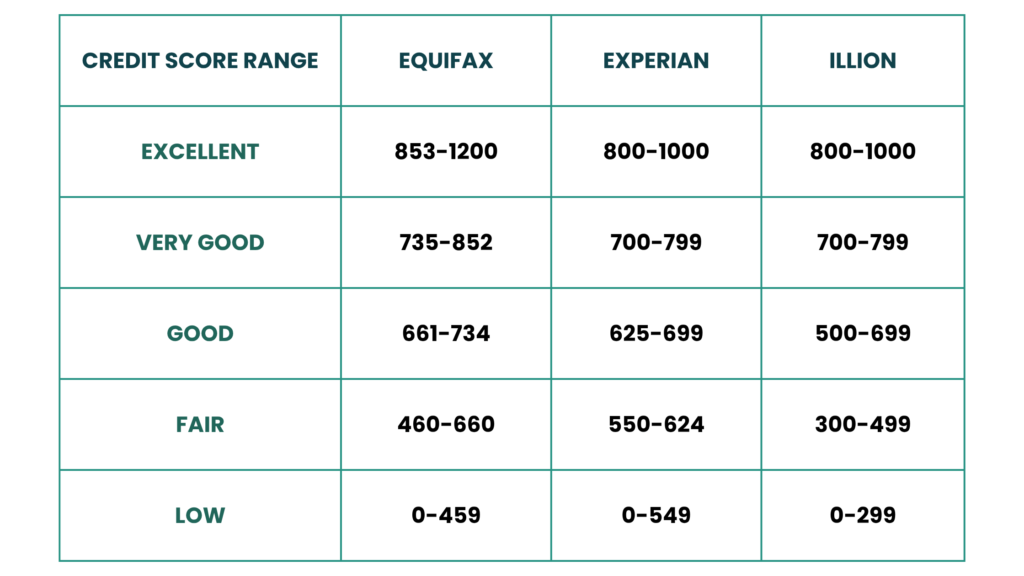
How Your Credit Score Changes
Credit scores aren’t permanent. It moves up or down depending on how you handle your finances. Paying your bills on or before their due dates is one of the easiest ways to keep your score healthy. Missing payments or defaulting on a loan can cause noticeable drops, even if the rest of your record looks good.
Another factor is credit utilization, which is how much of your available credit you use. Regularly maxing out your credit card or taking on multiple new loans in a short period can make lenders cautious.
What 700 And 800 Really Mean
If your credit score is around 700, that’s already a good sign. It tells lenders that you’re managing your finances well. You likely pay your bills on time, don’t overuse your available credit, and avoid taking out loans you don’t need. Essentially, a 700 credit score shows you’re a good and reliable borrower.
Equifax data shows that the average credit score in Australia is 861, so a score in the 800s is well above average.
Lenders often reward good borrowers with lower interest rates, faster approvals, and better loan terms. For example, two people might have the same income, but the one with an 800 score will likely qualify for a more competitive mortgage rate.
The Advantages Of An 800 Credit Rating
Scores in the 800s fall into the ‘excellent’ category for most credit reporting agencies. This level of credit strength can lead to:
- Lower interest rates
- Faster loan approvals
- Better borrowing limits
- Access to premium credit products
While maintaining this level requires consistency, even small mistakes like missed payments or unnecessary credit enquiries can affect your score.
Very few Australians reach the maximum score, and lenders don’t expect perfection. What matters most is maintaining a stable and reliable credit history.

Improving and Maintaining a Strong Credit Score
Even with a strong score, it’s important to continue building good financial habits and correcting any inaccuracies in your credit file.
Many people turn to credit repair services when they find errors, outdated listings, or issues affecting their credit profile. These services can help identify negative entries and support disputes where necessary.
Australian Credit Savers reviews credit reports for invalid listings and inaccurate information, helping clients challenge and remove issues that may be affecting their score. You can request a free credit report assessment to get started.