
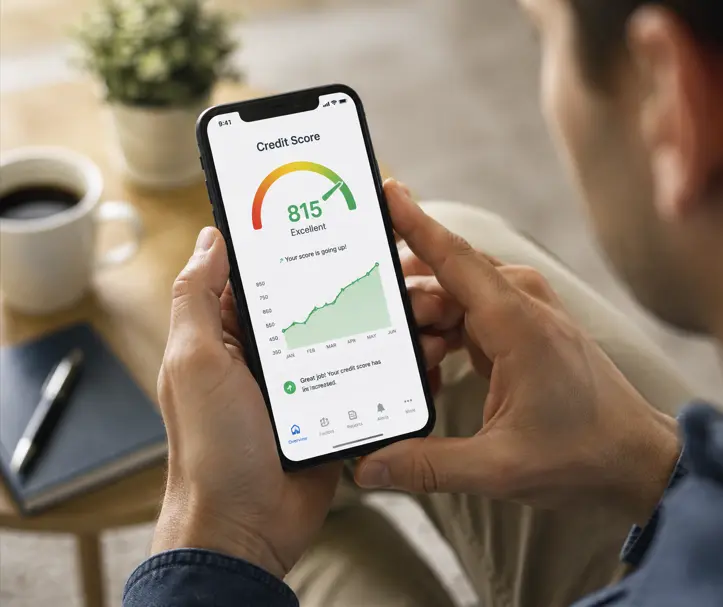
The best free credit score apps in Australia are GetCreditScore (Equifax) and My Credit File (Experian), Australia’s two main credit bureaus. Since each bureau holds a separate file, checking both gives you the most complete picture of your credit profile. If anything on your report looks wrong or unfamiliar, you have the legal right to dispute it.
What Is a Credit Score and Why Does It Matter?
A credit score is a number that summarises how reliably you have managed borrowed money in the past. In Australia, it sits somewhere between 0 and 1,200 depending on the bureau, and is calculated based on information in your credit report. This includes your repayment history, the type and number of credit accounts you hold, any defaults or court judgments listed against you, and how often lenders have run credit checks on you.
Lenders, landlords, and even some utility providers check your credit score before deciding whether to approve your application and on what terms. A stronger score generally means better rates, faster approvals, and more choice. A lower score can mean rejections, higher interest rates, or strict deposit requirements.
Approximately 1.8 million Australians have missed a credit card repayment at some point. Many do not realise the impact on their credit file until they are rejected for a loan. Checking your free credit score in Australia before you apply for anything gives you a clearer picture of where you stand.
What Is the Best App to Check Your Credit Score in Australia?
Australia currently has two main consumer credit reporting bureaus: Equifax and Experian. illion, previously the third bureau, was acquired by Experian in October 2024 and its consumer credit data has since been consolidated into the Experian bureau.
Each bureau collects its own data and produces its own score, so the number you see on one platform may differ from the number on another. That is normal, not a mistake. When choosing a credit score app in Australia, the platform you start with should reflect which bureau your lender is most likely to consult.
GetCreditScore (Powered by Equifax)
GetCreditScore is a free platform powered by Equifax, one of Australia’s two main consumer credit bureaus. It gives you access to your Equifax credit score and a report overview without requiring a subscription. The platform uses a scoring band from 0 to 1,200 and updates your score regularly.
Equifax data is used by the majority of major Australian lenders, including the big four banks, so this is the most relevant score to check before applying for a home loan or personal loan.
myEquifax (Equifax Free Credit Report)
The Equifax personal products portal also lets you access a free Equifax credit report once every three months, or more frequently via a paid subscription. The free report is the most detailed option available from Equifax at no cost. It includes your full credit history: open and closed accounts, repayment history records, any defaults or court judgments, and a list of every enquiry made against your file.
My Credit File (Powered by Experian)
My Credit File is Experian’s consumer-facing platform for Australians who want to check their credit report for free. Experian is one of Australia’s two main credit bureaus alongside Equifax, and maintains its own separate database of credit information. Your Experian report may include different listings to your Equifax report, depending on which bureau your lenders report to.
My Credit File offers a free credit report option dispatched within 10 business days, or a faster paid subscription that delivers your report within one business day. It is worth checking your Experian file at least once, particularly if you have been declined by a lender who may not use Equifax as their primary bureau.
What About Credit Simple (Previously Powered by illion)?
Credit Simple was illion’s free credit score platform. Following illion’s acquisition by Experian in October 2024, Credit Simple no longer operates as a separate independent bureau. If you previously used Credit Simple to monitor your credit score, your underlying credit file data has been consolidated into Experian. You can now access the same Experian data through My Credit File at no cost.
How Do I Check My Credit Score for Free in Australia?
Knowing how to check your credit score for free in Australia is one of the most useful financial habits you can build. The process takes less than ten minutes once you have your identity documents ready, and there is no cost involved regardless of which bureau you choose. Each bureau requires you to verify who you are before showing your credit file, which is a legal privacy requirement.
Follow these steps to check your credit score for free:
- Choose which bureau to start with. Equifax is the best first choice for most Australians given its prevalence among major lenders.
- Visit the bureau’s free consumer portal. GetCreditScore or myEquifax for Equifax, My Credit File for Experian.
- Create a free account using your name, date of birth, email address, and mobile number.
- Verify your identity using two identity documents. You will typically need a combination of your driver’s licence, passport, or Medicare card.
- View your credit score on screen immediately, or wait for your report to be dispatched if you select the free postal option.
- Review your score and read through your report carefully, look for accounts you do not recognise, defaults you were not notified about, or enquiries made without your consent.
Most portals let you download or save a copy of your report. If anything in your report looks incorrect, note it down before closing the page. That information becomes the starting point for a credit dispute.
What Are the Credit Score Bands in Australia?
A good credit score in Australia is generally considered to be 661 or above on the Equifax scale, which runs from 0 to 1,200. On the Experian scale, which runs from 0 to 1,000, a Good score starts at 625, with 700 or above considered Very Good.
Equifax uses five scoring bands: Below Average, Average, Good (661 to 734), Very Good (735 to 852), and Excellent (853 to 1,200). A score in the Very Good or Excellent range gives you the strongest chance of being approved for loans at competitive interest rates.
It is worth understanding that no universal good score applies across all lenders. Each lender sets its own approval criteria and may weigh different parts of your credit history differently. Your score is a guide, not a guarantee of any particular outcome.
If your score is lower than you expected, the next step is to understand why. Reviewing your full credit report often reveals specific listings, such as a default from a past debt or a repayment history issue, that are pulling the number down.
What Is a Good Credit Score in Australia?
A good credit score in Australia is generally considered to be 661 or above on the Equifax scale (which runs from 0 to 1,200), or 625 or above on the Experian scale (which runs from 0 to 1,000), with 700 or above considered Very Good on either bureau.
Each bureau uses its own scoring bands and terminology. Equifax, for example, uses five bands: Below Average, Average, Good (661 to 734), Very Good (735 to 852), and Excellent (853 to 1,200). A score in the Very Good or Excellent range gives you the strongest chance of being approved for loans at competitive interest rates.
It is worth understanding that no universal good score applies across all lenders. Each lender sets its own approval criteria and may weigh different parts of your credit history differently. Your score is a guide, not a guarantee of any particular outcome.
If your score is lower than you expected, the next step is to understand why. Reviewing your full credit report often reveals specific listings, such as a default from a past debt or a repayment history issue, that are pulling the number down.
Can I See My Full Credit Report for Free in Australia?
Yes. Accessing your credit report in Australia for free is a legal right. Under the Privacy Act 1988 and the Privacy (Credit Reporting) Code, both overseen by the Office of the Australian Information Commissioner (OAIC), you are entitled to a free copy of your report from each bureau once every three months, and at any time if you have been declined for credit in the last 90 days.
To access your free credit report in Australia from each bureau:
- Equifax: visit the myEquifax portal or GetCreditScore and request your free credit report, available every three months at no charge
- Experian: visit My Credit File and select the free report option, dispatched within 10 business days
Your credit score and your full credit report are two different things. The score is a single number. The report is the full underlying document, which includes every account, every repayment record, every credit enquiry, and any adverse listings such as defaults, court judgments, or bankruptcy records. The report is what reveals the specific reasons behind your score.
If you want to understand your financial position properly, request the full report, not just the score summary.
What to Do If Your Score Is Lower Than Expected
Finding errors, unexpected defaults, or listings you were not aware of is more common than most people expect. Under Australian privacy law, every listing on your credit file must be accurate, complete, and up to date. If a listing does not meet those standards, you have the right to have it reviewed.
Common issues people find on their credit reports include defaults they were never properly notified about, credit enquiries made without their authorisation, repayment history recorded incorrectly, and old debts that have already been paid but are still listed as outstanding.
If something looks wrong on your report, start by noting the name of the credit provider, the date of the listing, and the amount involved. Then review our credit enquiry disputes and invalid default listings pages to understand what your options are.
The dispute process involves contacting the relevant credit provider and the bureau directly, providing evidence that the listing is inaccurate, and requesting that it be corrected or removed. This process can take time and requires persistence, particularly if the credit provider is unresponsive or disputes your claim.
If you have found errors on your credit file and the self-managed path has not produced results, the team at Australian Credit Savers works with people across Australia to identify inaccurate listings and dispute them on their behalf. Our licensed credit repair specialists have helped clients see significant improvements in their credit scores after successfully disputing incorrect or invalid listings. Past outcomes do not guarantee future results, and individual circumstances vary.
Get a Free Credit Assessment from Our Licensed Team

If your credit score is lower than you need it to be and you want professional guidance on your options, Australian Credit Savers offers a free credit assessment. Our team holds Australian Credit License (ACL) 578002, issued by the Australian Securities and Investments Commission (ASIC), and is a member of the Australian Financial Complaints Authority (AFCA), member number 104645. Disputes that cannot be resolved directly with a credit provider can be escalated to AFCA, which provides free and independent dispute resolution. The Privacy Act 1988 and the Privacy (Credit Reporting) Code are overseen by the Office of the Australian Information Commissioner (OAIC).
We operate on a no win, no fee basis. A $330 non-refundable investigation fee applies at the start of the process and is credited toward the total service fee if your matter proceeds. You only pay further service fees if we achieve a successful outcome for you.
Getting started is free. Call 1800 844 185 or reach out through our contact page and one of our licensed specialists will walk you through what your credit file may show and whether there are grounds to dispute any listings. There is no obligation to proceed.
Frequently Asked Questions
How often can I check my credit score for free in Australia?
You can access a free credit score in Australia through bureau platforms like GetCreditScore and My Credit File as frequently as monthly, or even more often depending on the platform. Under the Privacy Act 1988, you are also entitled to a free full credit report from each bureau at least once every three months, or sooner if you have been declined for credit in the last 90 days.
Is my Equifax score the same as my Experian score?
No. Equifax and Experian are separate credit bureaus that maintain their own databases and use their own scoring models. Because not every lender reports to every bureau, the information in your Equifax file may differ from your Experian file. It is worth checking both to get a complete picture of your credit profile.
What is a credit enquiry and why does it affect my score?
A credit enquiry is recorded on your file when a lender or credit provider requests a copy of your credit report as part of a loan or credit application. Multiple enquiries in a short period can suggest to lenders that you are applying for credit frequently, which some scoring models interpret as a risk signal. Checking your own score does not count as a credit enquiry.
What is a default listing and how long does it stay on my credit file?
A default is a record that a debt of $150 or more was overdue by at least 60 days and that a formal notice was sent to you. In Australia, a default can remain on your credit file for up to five years from the date it was listed. A paid default still stays on your file for that same period, though some lenders view a paid default more favourably than an unpaid one. If you believe a default was listed incorrectly, you may have grounds to dispute it through our repayment history dispute resolution service.
Can a credit repair company actually help me?
A licensed credit repair company can help you identify inaccurate, incomplete, or outdated listings on your credit file and dispute them with the relevant credit provider and bureau on your behalf. They cannot remove accurate listings that are legitimately recorded. If you have been told your credit file contains errors or you suspect something is wrong, a free assessment with Australian Credit Savers is a straightforward way to understand your options.
Key Takeaways
- Each credit score app pulls from a separate bureau. Equifax is used by most major lenders, making it the most relevant starting point for most Australians.
- Checking your own credit score is a soft enquiry. It does not appear on your file or affect your rating in any way.
- You are legally entitled to a free credit report from each bureau at least once every three months under the Privacy Act 1988, overseen by the OAIC.
- If your report contains inaccurate or incorrectly listed items, you have the legal right to dispute them. A licensed credit repair specialist can assist where self-managed attempts have not resolved the issue.
- Equifax’s Good score band starts at 661 on a 0 to 1,200 scale. Experian’s Good band starts at 625, with Very Good at 700, on a 0 to 1,000 scale.
- The two main free credit score apps in Australia are GetCreditScore (Equifax) and My Credit File (Experian). illion was acquired by Experian in October 2024 and Credit Simple no longer operates as a separate independent bureau.