
Your credit score is one of the most important financial indicators in Australia, yet many people are unsure how it is actually calculated.
Credit reporting agencies, often called credit bureaus, play a central role in deciding how lenders see you. Whether you’re applying for a home loan, comparing low interest credit cards, or searching for the best no fee cards in Australia, your credit score can shape the offers you receive.
What Credit Reporting Agencies Actually Do
Credit reporting agencies gather financial information about consumers and organize it into individual credit files. These files show lenders how you handle money and how likely you are to repay debt. Every time you apply for a low-rate credit card or take out a loan, the lender checks your report to judge the level of risk involved.
These agencies do not decide whether you should be approved for a card or a loan. Their job is to collect data, maintain your file, and calculate a score based on the details they receive from banks, card providers, utility companies, and sometimes even telco providers. They become the middle ground between you and the businesses that lend you money.
Because they deal with huge amounts of data, the score they produce needs to be calculated as consistently as possible. This is why credit scores often follow strict formulas. Each credit bureau may use its own scoring method, but the core principles are similar across different systems.
Where Credit Bureaus Get Your Information
The data in your credit report does not appear out of nowhere. It is fed to the agencies by the organisations you have financial relationships with. Each time you pay your mobile plan, meet your monthly credit card dues, or apply for a new card, the information travels to the bureau.
Positive behavior is now more commonly recorded, unlike years ago when only negative listings were shared. Timely repayments on your low annual fee credit card, for example, can help strengthen your score. On the other hand, missed payments, default, or high utilisation can weaken your profile. This constant flow of information is what gives the bureaus a full picture of your habits as a borrower.
The agencies do not edit or change the data they receive. They simply record it. If something inaccurate appears on your file, it is usually because the information reported to them contained an error. This is why credit repair exists: it helps correct mistakes and gives you a fair chance when applying for low-interest cards or loans.
How Credit Scores Are Calculated
As mentioned earlier, credit reporting agencies in Australia use their own scoring systems, but they all follow similar principles. A credit score is a number that summarises how likely you are to repay your debts. The higher the score, the less risky you appear to lenders.
Credit scores are typically based on the following factors:
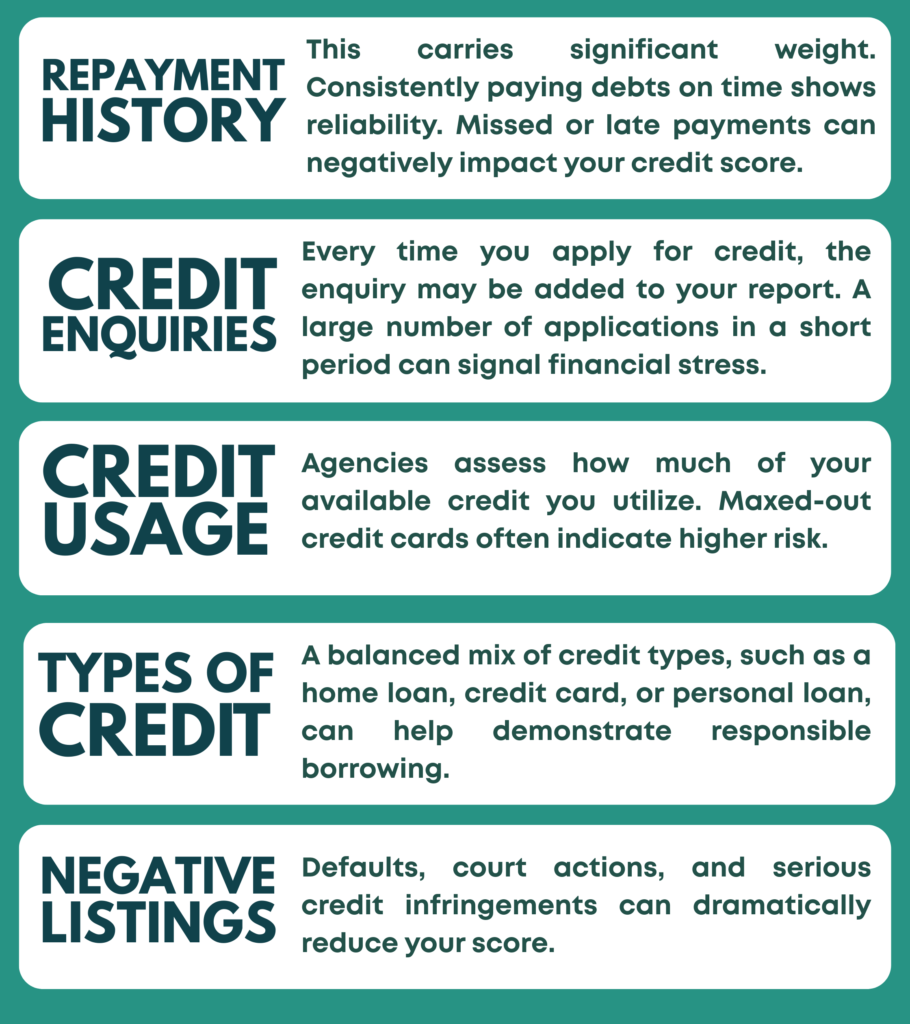
Because each agency uses its own formulas, your score may vary slightly depending on where you check. This is normal and expected. Australian Credit Savers assists individuals by identifying incorrect information and disputing it with the reporting agencies on their behalf.
How Credit Bureaus Communicate With Lenders
When a dispute is lodged, the credit reporting agency contacts the lender that supplied the information. The lender must then review the listing and verify whether it is correct.
However, some lenders take longer than others to respond, and some may not fully investigate proper documentation. In situations like this, many Australians begin to recognize the benefits of working with a credit repair service, especially when disputes require proper structuring and consistent follow-up.
This is why many Australians seek support from Australian Credit Savers, who understand how to prepare dispute submissions effectively and ensure both the lender and credit reporting agency properly assess the issue for accuracy and compliance.
How Do You Get A Credit Report?
Every Australian has the right to request a free copy of their credit report once every three months from each of the major credit reporting agencies.
You can also request a free copy if you are denied credit based on your report.
To obtain your credit report, you normally need to provide personal identification such as your full name, address history, email, phone number, and ID documents. Each agency offers online request forms, and some also accept mail or phone requests.
The report is usually delivered within a few business days if you request the standard free copy. Urgent requests may attract a small fee, depending on the provider.
How To View Your Credit Report Properly
When reviewing your report, look for:
- Incorrect personal details
- Accounts you do not recognize
- Duplicate listings
- Outdated information
- Incorrect repayment records
Even small errors can affect your borrowing capacity. This is the reason why professional oversight helps. Australian Credit Savers ensures your file is examined carefully so no important detail is missed.
Credit Reporting Agencies For Businesses
Businesses also have credit files, and these reports are crucial for securing trade credit, supplier accounts, and business loans. A business credit report includes the company’s ABN details, director information, credit enquiries, trade lines, payment patterns, and any legal actions such as court judgments or insolvencies. Lenders and suppliers use these reports to evaluate whether a business is financially stable and capable of meeting its obligations.

Your Rights Under Australian Credit Laws
Australian credit laws provide protections for consumers.
You have the right to:
- Access your credit report
- Dispute incorrect information
- Request corrections
- Ask for investigations
- Place a temporary ban in cases of identity theft
These protections ensure your credit information is handled fairly.
Australian Credit Savers works within these regulations when handling disputes for clients. Their understanding of the legal framework helps ensure that disputes are submitted correctly and that credit reporting agencies respond within the required timeframes.
Taking Control Of Your Credit Future
Understanding how credit reporting agencies work is one of the most effective ways to take control of your financial life. Your credit score influences key financial decisions, from loan approvals to interest rates, rental applications, utilities, and even certain business opportunities in Australia.
Many Australians only check their credit report when something goes wrong, like a loan rejection, an unexpected default, or an unexplained drop in their credit score. But it shouldn’t be this way. You should check your credit report regularly.
The reality is that not all credit files are perfect. They rely on data supplied by lenders, utilities, and courts, which means errors can occur at any point. Outdated information, duplicated listings, incorrect repayment records, or accounts that do not even belong to you can all find their way into your report. When this happens, the consequences can be serious, especially if you’re preparing for a major milestone like buying a home or starting a business.
Regularly checking your report from all major credit reporting agencies ensures you stay informed, spot issues early, and protect your financial identity before damage occurs. Maintaining good financial habits, such as paying bills on time, limiting unnecessary credit applications, and keeping track of your accounts, builds a stronger foundation for your score over time.
However, there are situations where reviewing your report is not enough. When you find listings that seem unfair, inaccurate, or impossible to resolve on your own, professional assistance becomes essential.
At Australian Credit Savers, we assist individuals in reviewing their credit reports, identifying potential inaccuracies, and managing the dispute process in a structured and compliant way. Our goal is to help ensure your credit file reflects accurate and up-to-date information.
With a properly maintained credit file, you position yourself for stronger loan applications, more competitive interest rates, and better financial opportunities overall.
Contact Australian Credit Savers today to book your free credit report assessment and take the first step toward improving your credit profile.