
Credit card debt can feel heavy, especially when interest keeps piling up, and the balance barely moves. The good news is that there are practical ways to take control of your payments, reduce what you owe, and eventually become debt-free.
Why Credit Card Debt Feels Hard To Pay Off
Before exploring solutions, it’s important to understand why paying a credit card feels like it takes forever. Unlike other bills, credit card repayments include interest that is calculated daily based on outstanding balance. If you’re only paying the minimum, most of your money goes toward interest rather than reducing the principal.
This is why many people search for ways on how to pay off debt fast or how to pay off bills quickly, because minimum payments alone won’t get you anywhere. The faster you lower the principal, the faster you can break the cycle of increasing interest.
1. Start With A Clear List Of All Your Credit Cards
The first step in learning how to pay off credit card debt is knowing exactly what you’re facing. List each card along with its balance, interest rate, and minimum monthly payment. Many people skip this step because it feels overwhelming, but having a full picture helps you decide on the best repayment method.
This also allows you to determine credit card payments more accurately. Instead of guessing, you can actually see where most of your income should go and which card is costing you the most in interest.
2. Choose A Strategy That Matches Your Financial Situation
People often think there is one “right” way of paying off CC debt, but the reality is that you should choose the method that fits your budget and mindset. Here are two commonly used approaches:
The Avalanche Method VS the Snowball Method
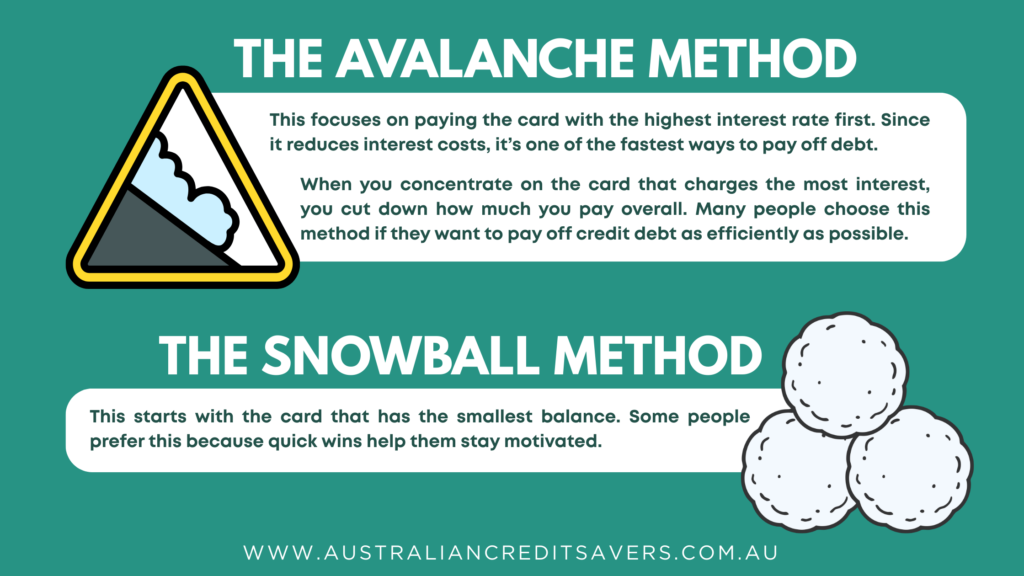
Whichever approach you choose, make sure you continue paying at least the minimum on all cards to avoid late fees and credit score damage. Over time, the extra payments you focus on one card will help you pay off bills fast without feeling overwhelmed.
3. Pay More Than The Minimum - Even A Little Helps
Minimum payments keep you in debt longer. When you only pay the minimum, most of your payment goes toward the interest, not the actual balance. One of the simplest ways to pay off credit card debt faster is to pay more than the minimum, even if it’s just a small amount each month.
If you increase your payments regularly, you reduce your balance quicker and slowly gain momentum. This small habit makes a major difference in how fast you repay credit card debt.
4. Reduce Your Spending On Non-Essentials Temporarily
For many individuals, the challenge isn’t the ability to pay credit card payment, it’s finding extra money to make those payments. By temporarily reducing spending on non-essential items, you can free up more cash.
Cutting back doesn’t have to mean depriving yourself. It can simply mean choosing less expensive alternatives, switching to generic brands, cooking at home, or delaying impulse purchases. Every small amount you save can go toward your credit card repayment and help you pay off bills quickly.
5. Use Balance Transfers Carefully And Wisely
If you have good credit, you may qualify for a balance transfer credit card with a low or 0% introductory rate. This option allows you to move your existing credit card balance to a card with reduced (or no) interest for a certain period.
It can dramatically speed up how you pay off credit card debt, especially if high interest has been holding you back. However, be careful with fees, deadlines, and new purchases. A balance transfer only works if you stay disciplined and focus on paying off the transferred amount within the promotional period.
6. Explore A Debt Consolidation Loan
Some people choose a personal loan to merge several credit card debts into one fixed monthly payment. This option can be helpful if the loan’s interest rate is lower than the rates on your credit cards.
A consolidated loan simplifies your monthly budgeting, allows you to determine credit card payment obligations more clearly, and helps reduce the stress of managing multiple due dates. It also prevents you from dealing with high daily interest rates that usually come with credit card accounts.

7. How Debt Management And Negotiation Services Can Help You Reduce What You Owe
If your credit card balances feel too large to handle on your own, or if high interest rates are keeping you stuck, Australian Credit Savers’ debt management and negotiation services can give you the structure and support you need. These services are designed for people who want to pay off debt fast but feel overwhelmed by how much they owe or how complicated their repayment situation has become. Instead of trying to figure out everything by yourself, you get a team that negotiates on your behalf and helps you create a realistic path toward becoming debt-free.
When your repayment schedule becomes easier to manage, you can focus on the goal instead of the stress. Our skilled debt negotiators work directly with your creditors to request lower interest rates, reduce fees, or create more affordable repayment terms. In many cases, high interest is the biggest barrier to paying off credit card debt quickly. So when your interest rate is reduced, more of your money goes toward the principal instead of being eaten by charges.
Creditors are often more willing to cooperate when they see that a structured plan is in place and that you’re committed to repaying what you owe. Having professionals communicate on your behalf can make that conversation smoother and more effective.
Learn more about debt negotiation and settlement support services here.
8. Avoid Using One Credit Card To Pay Another
You might wonder how to pay credit card bills with credit cards or whether you can use one card to pay another. While some platforms allow credit card to credit card payment, it often comes with high fees, cash advance charges, and increased interest rates. In most cases, it creates more debt instead of reducing it.
If you are trying to pay off bills fast, it’s better to use actual income, savings, or a structured repayment plan rather than relying on credit card payments from credit card transactions.
9. Increase Your Income Even Slightly
If you’re serious about paying off debt fast, any extra income helps. This does not require a full side job. It could involve selling unused items, taking small freelance tasks, or working a few extra hours if your job allows it.
Every additional dollar you put toward your balance brings you closer to clearing your credit card debt. Even short-term boosts in income can make a noticeable impact, especially when combined with reduced spending.
10. Automate Your Credit Card Payments
Automation is an easy yet effective way to avoid missed payments and extra charges. Many people lose money due to late payment fees without realizing how much it adds up.
By automating at least the minimum payment, you ensure your account stays in good standing. Then, whenever you have extra funds, you can make additional payments to reduce the balance faster.

11. Track Your Spending And Set Monthly Goals
If you want to know how to pay off debt fast, disciplined tracking is essential. When you monitor where your money is going, it becomes easier to identify patterns, cut unnecessary expenses, and redirect funds into your credit card repayment plan.
Set small monthly repayment goals. Achieving these goals gives you a sense of progress and keeps you motivated throughout your financial journey.
12. Work With Credit Repair Experts To Remove Bad Credit Faster
While you can manage your own repayment strategy, many people choose to work with our credit repair experts to remove bad credit more efficiently. Our credit repair professionals specialise in analysing your credit report, identifying errors, and guiding you through steps that can improve your credit standing. If your goal is not only to pay off credit card debt but also to restore your financial image, getting expert help can make the process smoother and more effective.
Our credit repairers at Australian Credit Savers create personalised plans tailored to your situation. We look at your entire financial picture, not just the debts you want to clear, and help you understand how different actions will affect your credit score. This guidance is especially useful if you have several credit cards, loans, or bills to manage. Instead of guessing how each payment impacts your credit, you get a structured strategy that supports long-term improvement. Many people find that having this clarity reduces stress and helps them stay consistent with their repayment goals.